University of Milan (La Statale)
The Università degli Studi di Milano, which everyone in the city just calls La Statale, is the largest university in Milan and one of the largest in Italy. For an exchange student the useful headline is not its size, it is this: 36 of its degree programmes are taught entirely in English, and most of them sit in two areas, science and technology, and the political and social sciences.
It is a public university, so you will meet Italian students in a way you will not at the smaller private schools. And one thing about it is changing right now, which matters a lot if you are about to sign a lease. That is further down.
Degree programmes taught in English
Checked on the university’s own list in August 2026. The page does not state which academic year it refers to, so treat this as the current picture rather than a guarantee for a specific year.
| Level | How many in English |
|---|---|
| Bachelor’s | 4 |
| Single-cycle | 1 (International Medical School) |
| Master’s | 31 fully in English, plus 5 more with an English curriculum |
The four bachelor’s programmes are Artificial Intelligence, Ancient Civilizations for the Contemporary World, Economics: behavior, data and policy, and International Politics, Law and Economics.
At master’s level the concentration is clear. Science and Technology has eleven, including Computer Science, Quantitative Biology, Geophysics, Bioinformatics and Data Science for Economics and Health. Political, Economic and Social Sciences has ten, including Economics and Political Science, Finance, Global Politics and Society, and Migration Studies. The rest are spread across agricultural and food sciences, pharmacy, medicine, law and humanities.
Watch the wording on five of them. Pharmaceutical Biotechnology and Philosophical Sciences have one curriculum in English, International Relations and Public and Corporate Communication have two. In those cases the whole programme is not in English, only that track, and you have to pick it. Theatre, Arts, Literatures is a different case again: it mixes Italian, English and other European languages, and lets you take some Italian-taught courses in English.
Beyond degrees there are two joint-degree master’s run with international consortiums, and 22 doctoral programmes taught entirely in English. You will not enrol in a doctorate on exchange, but it tells you how much of the university’s daily research life already runs in English.
Where you actually study, by subject
La Statale is not one campus. It is spread across the city, and which part you end up in depends entirely on your subject.
Humanities, law, political and social sciences are based at the historic centre, in and around Via Festa del Perdono, a few minutes from the Duomo. Sciences, biology, chemistry, physics, computer science and pharmacy are in Città Studi, east of the centre, which has been the student quarter of Milan for a century. Medicine and veterinary science have their own sites again, attached to hospitals.
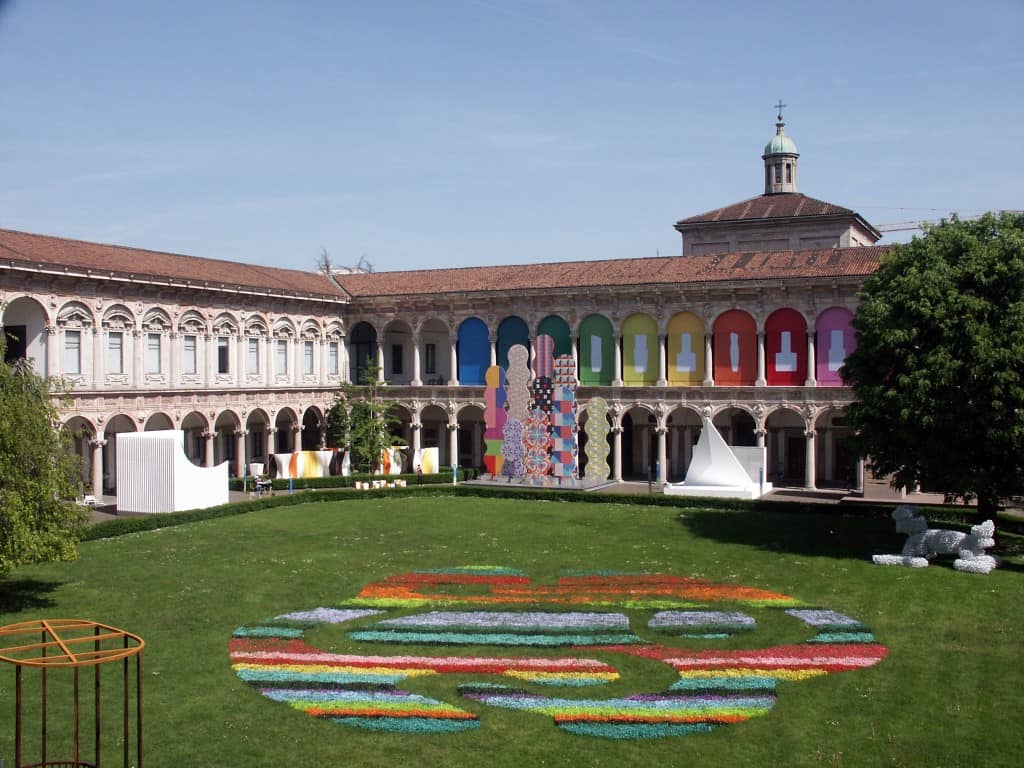
The central building is worth two lines of history, because it explains what you are walking into. It is called Ca’ Granda, the “big house”, and it was built in the fifteenth century as the city hospital. That is why the main site is a set of courtyards and porticoes rather than a modern campus, and why the university feels stitched into the old city rather than parked outside it.
The move to MIND, and why it affects your rent
This is the part no older guide will tell you.
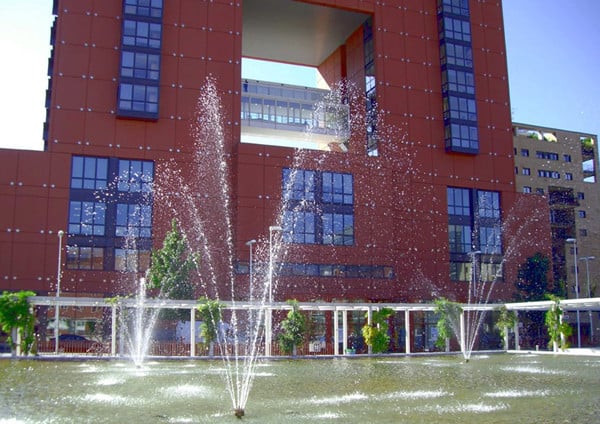
La Statale is building a new scientific campus at MIND, the Milan Innovation District, on the former Expo 2015 site between Rho and Pero, in the north-west of the metropolitan area. When it is finished the scientific faculties move there from Città Studi, and Città Studi becomes the humanities campus.
What is true as of August 2026: teaching is still in Città Studi. The building that will host lectures is due to be completed around the end of 2026, and the campus is expected to be fully operational across 2027 and 2028. The first student residence at MIND has only just broken ground.
So if you arrive for the 2026/27 year, you study where students have always studied. But the two locations are at opposite ends of the city: Città Studi is east, MIND is north-west, out towards the fair grounds. If you are a science student signing a contract for more than a year, check where your own courses will be taught before you choose a neighbourhood. Getting that wrong is not a small inconvenience, it is a daily commute across the whole of Milan.
There is a second consequence that costs money, and almost nobody mentions it. MIND is served by the M1 at its terminus, Rho Fiera Milano, but that station sits outside the Milan city boundary. A standard urban ATM pass, the one most students buy, does not cover it: you need a tariff extension on top. If your faculty ends up at MIND, budget for a more expensive travel pass than the one described in our guide to transport in Milan.
Where Statale students live
It follows from the campuses. Humanities and law students tend to look at the centre and the south east, around Porta Romana, Crocetta and Porta Venezia, which are convenient and priced accordingly. Science students concentrate around Città Studi, Lambrate and Piola, which is the best combination of price and walking distance in the city for them.
If your budget is tight, Lambrate and the areas a little further out on the M2 are the usual answer. We break the whole city down, zone by zone with what a room costs in each, in our guide to the zones of Milan.
Coming on Erasmus or exchange
You do not apply to La Statale directly. Your home university nominates you, which means the two universities need an agreement in place for your subject. That is a conversation with your own international office, not with Milan.
Your Learning Agreement is the document that matters, and the thing to know is that changes to it have to be approved on both sides: your coordinator at home and your contact person at La Statale. Course timetables and availability shift, so expect to revise it once you arrive and are looking at the real timetable rather than the catalogue.
Three practical details that catch people out.
Say yes to the Italian courses on the application form, not later. The university runs Italian language courses for incoming students, but you have to declare that you want them when you apply, and there is a deadline: 30 June for a first-semester mobility, 30 November for the second. Miss it and you are chasing it from Milan. Take the courses. A semester of even basic Italian changes how much of the city is open to you, and you will not get free lessons this easily again.
Your enrolment is not finished when you land. You complete it at the International Mobility Office, by appointment, within two days of arriving, and that is where you collect your Carta La Statale student card and your enrolment certificate. Plan your arrival so those two days are not the weekend you meant to spend in Como.
Everything academic happens on Unimia. It is the student portal, and the Erasmus Office gives you the credentials when you arrive. Course registration, exam booking and results all live there. The detail that costs people an exam session: exam registration deadlines are set by the individual professor, not centrally, so there is no single date to remember. Check each course separately.
Questions
Yes. There are 4 bachelor’s programmes, 1 single-cycle programme (the International Medical School) and 31 master’s programmes taught entirely in English, plus 5 more where only one or two curricula are in English.
In several places. The historic centre at Via Festa del Perdono for humanities, law and social sciences; Città Studi in the east for the sciences; separate hospital sites for medicine and veterinary science.
The scientific faculties are, but not yet. The teaching building is due around the end of 2026 and full operation is expected in 2027 and 2028. For the 2026/27 year, science teaching is still in Città Studi.
Città Studi, Lambrate and Piola for the sciences; the centre, Porta Romana and Porta Venezia for humanities and law. Lambrate and the outer M2 stops are where the cheaper rooms are.
Yes, but you have to ask for them on your application form, by 30 June for the first semester or 30 November for the second. It is not something you can arrange once you are here.
No. On an exchange you stay enrolled at your home university and pay your fees there. If you are applying for a full degree instead, the fees are on the university’s own fees page.
🎒 Enrolled at La Statale? The hard part is the two weeks after you land.
The Erasmus Milan Survival Kit is our free guide to arriving: the paperwork that actually applies to EU students, transport, banking, and the mistakes that cost the most money.
Or join the WhatsApp community → and ask people already studying here.
Related reading:
All universities in Milan for international students · The zones of Milan · Student accommodation in Milan · Cost of living in Milan · Getting around Milan · Student jobs in Milan · Erasmus events in Milan
The list of programmes taught in English is updated by the university once a year, in May. Course numbers here were checked in August 2026, and the campus move to MIND is in progress as we write, so check your own faculty’s location before signing a lease. Last updated: 28 August 2026.
Responses